

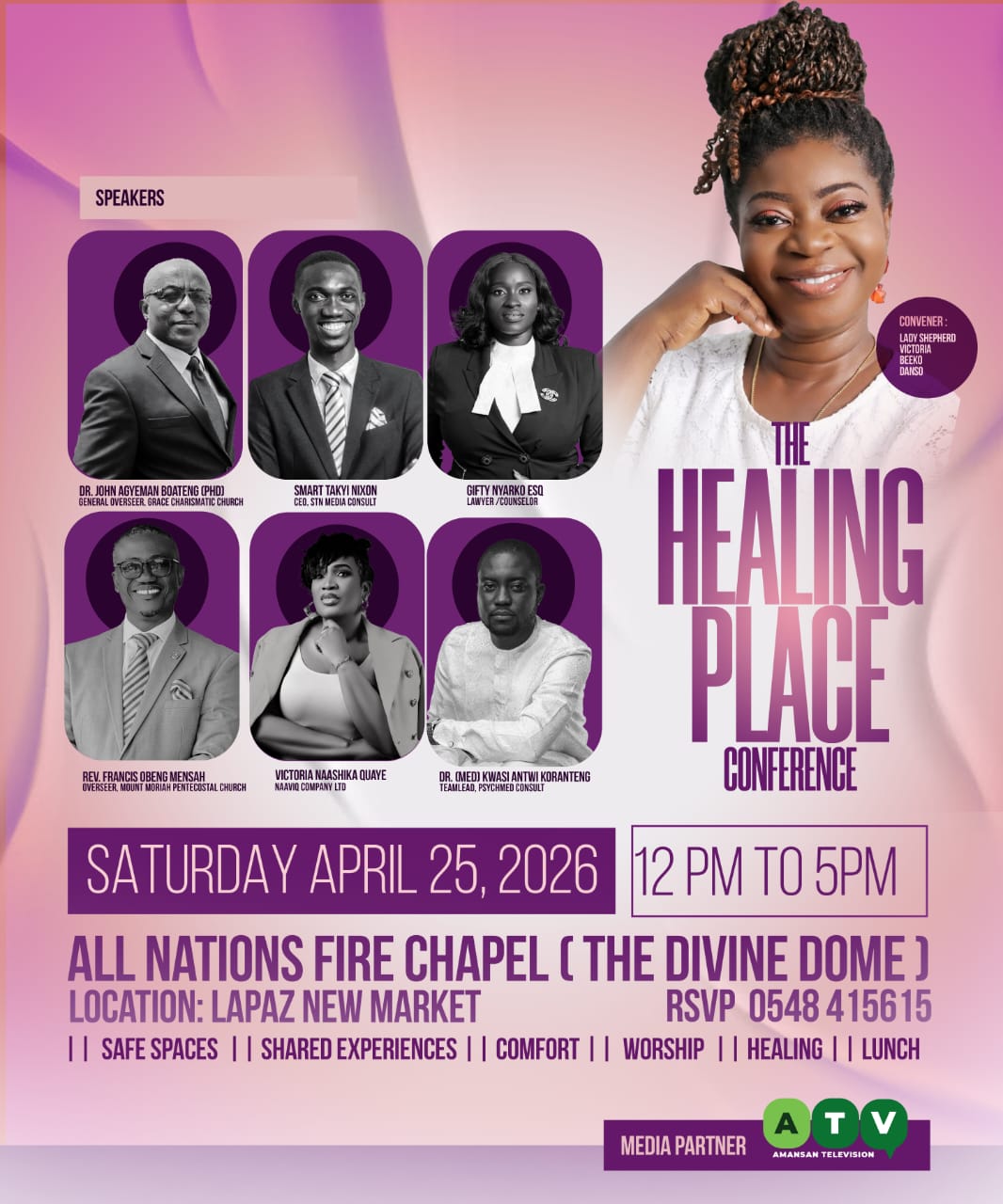
The maiden edition of The Healing Place Conference 2026 was held on Saturday, April 25, 2026, at the All Nations Fire Chapel (The Divine Dome) in Chantan, Accra.
The event brought together speakers from diverse professional and spiritual backgrounds to address themes of emotional healing, personal growth, and relationship challenges.
Convener Lady Pastor Victoria Beeko Danso said the conference was inspired by her personal interactions and conversations with individuals facing various life struggles. She noted that recurring concerns about forgiveness, emotional trauma, and marital difficulties informed the vision behind the gathering. The conference featured motivational speakers, broadcast journalists, counsellors, and ministers, with GN Media serving as the official media partner.
Faith-based conferences focused on emotional and psychological well-being have seen a steady rise in Ghana over the past decade, as organizers increasingly combine spiritual teachings with professional insights to address complex social issues. At the event, speakers including Dr. John Agyemang Boateng, Smart Takyi Nixon, and Dr. Kwasi Antwi Koranteng delivered sessions centered on resilience, mental health awareness, and personal transformation.
Legal and counselling perspectives were also introduced through contributors such as Gifty Nyarko Esq. and Janice Tiwah Oware Esq., reflecting a broader shift toward holistic healing frameworks where spiritual guidance is complemented by practical expertise. This approach mirrors a growing recognition of the interconnected nature of emotional, social, and spiritual well-being.
Speaking on the sidelines of the conference, Lady Pastor Victoria Beeko Danso said, “In many of my conversations, people were not just looking for prayer; they were looking for understanding, for someone to listen. That is what gave birth to this conference.” Participants who spoke to ATV Newsroom described the experience as impactful, with one attendee noting that discussions on forgiveness and emotional awareness helped her confront unresolved personal issues.
The conference highlights a growing demand for safe spaces where individuals can openly address emotional and psychological challenges within culturally familiar settings. In Ghana, where conversations around mental health often remain sensitive, such initiatives may contribute to reducing stigma and encouraging open dialogue.
Experts suggest that integrating faith-based outreach with professional counselling could expand access to mental health support, particularly in communities where formal services remain limited. As more organizations adopt this model, similar conferences may emerge as key platforms for education and community engagement.
While framed as a spiritual gathering, the event ultimately reflected a broader shift—one in which deeply personal struggles are increasingly shared in collective spaces, suggesting that for many, healing may begin not in isolation, but in conversation.